

What acreage floorplans reveal about how builders expect families to live on big land
Acreage homes are often described as simply “bigger houses on bigger blocks”, but floorplans tell a more nuanced story. Once space stops being scarce, the way homes are organised changes, not just in size, but in how families expect to live day to day. Looking across how established builders...

iBuildNew Editorial TeamJanuary 7, 20264 min read
Acreage homes are often described as simply “bigger houses on bigger blocks”, but floorplans tell a more nuanced story. Once space stops being scarce, the way homes are organised changes, not just in size, but in how families expect to live day to day.
Looking across how established builders structure their acreage ranges reveals different assumptions about family life, routine, and long-term use. Rather than focusing on façades or inclusions, these layouts quietly reflect how builders believe buyers will use both the home and the land around it.
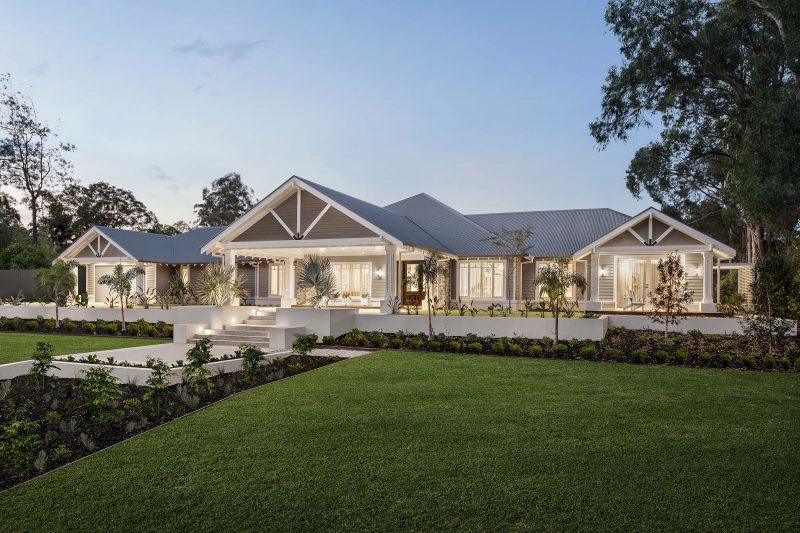 Fontaine facade, Fontaine
Metricon’s acreage floorplans reflect this mindset. Their designs typically retain the organisational logic buyers recognise, clear zoning between parents’ and children’s areas, defined leisure rooms set away from main living spaces, and elongated footprints that create natural separation across the home.
This approach suggests an acreage buyer who values order and routine, but wants it delivered with more breathing room. The house still runs on everyday rhythms, school mornings, quiet evenings, shared family spaces, just without the compromises imposed by smaller lots. Acreage, in this context, becomes an expansion of suburban living rather than a departure from it.
Fontaine facade, Fontaine
Metricon’s acreage floorplans reflect this mindset. Their designs typically retain the organisational logic buyers recognise, clear zoning between parents’ and children’s areas, defined leisure rooms set away from main living spaces, and elongated footprints that create natural separation across the home.
This approach suggests an acreage buyer who values order and routine, but wants it delivered with more breathing room. The house still runs on everyday rhythms, school mornings, quiet evenings, shared family spaces, just without the compromises imposed by smaller lots. Acreage, in this context, becomes an expansion of suburban living rather than a departure from it.
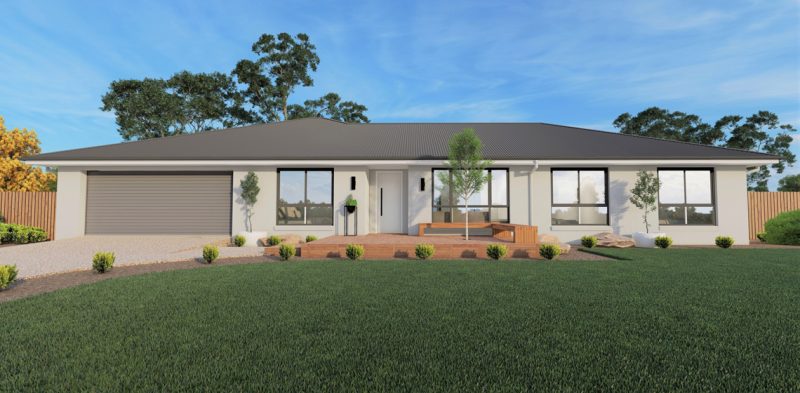 Beechmont, Classic Facade - Eden Acreage Home Designs
Hallmark Homes’ acreage layouts point to this way of thinking. Their designs consistently emphasise open-plan living that draws light and airflow deep into the home, with strong visual and physical connections between indoor and outdoor areas. Rather than heavily segmented interiors, these plans tend to feel more fluid, with fewer corridors and a greater sense of openness.
This reflects a buyer who expects to move between inside and outside throughout the day, whether that’s entertaining, working from home, or simply responding to climate. The acreage lifestyle here is less about retreat and more about connection, with the home acting as a mediator between family life and the surrounding environment.
Beechmont, Classic Facade - Eden Acreage Home Designs
Hallmark Homes’ acreage layouts point to this way of thinking. Their designs consistently emphasise open-plan living that draws light and airflow deep into the home, with strong visual and physical connections between indoor and outdoor areas. Rather than heavily segmented interiors, these plans tend to feel more fluid, with fewer corridors and a greater sense of openness.
This reflects a buyer who expects to move between inside and outside throughout the day, whether that’s entertaining, working from home, or simply responding to climate. The acreage lifestyle here is less about retreat and more about connection, with the home acting as a mediator between family life and the surrounding environment.
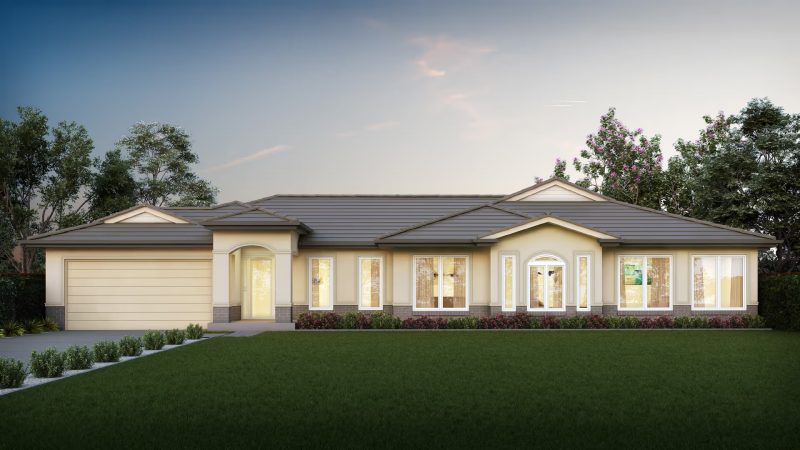 Stangate facade, Rutherglen
Eden Brae Homes’ acreage designs reflect this outlook. Large single-storey homes with multiple living areas suggest a focus on adaptability rather than fixed use. Privacy, separation from neighbours, and generous setbacks also point to buyers prioritising longevity and liveability over short-term appeal.
These layouts imply a home designed to evolve: spaces that can shift from work to leisure, accommodate extended family, or support ageing in place. Acreage, in this sense, is treated as a long-hold housing choice, where the floorplan needs to remain relevant as circumstances change.
Stangate facade, Rutherglen
Eden Brae Homes’ acreage designs reflect this outlook. Large single-storey homes with multiple living areas suggest a focus on adaptability rather than fixed use. Privacy, separation from neighbours, and generous setbacks also point to buyers prioritising longevity and liveability over short-term appeal.
These layouts imply a home designed to evolve: spaces that can shift from work to leisure, accommodate extended family, or support ageing in place. Acreage, in this sense, is treated as a long-hold housing choice, where the floorplan needs to remain relevant as circumstances change.
Metricon, VIC
Structure still matters, just at a larger scale For many families moving from suburban estates to acreage, familiarity still counts. The transition isn’t about reinventing how a household works, but about removing spatial pressure. Fontaine facade, Fontaine
Metricon’s acreage floorplans reflect this mindset. Their designs typically retain the organisational logic buyers recognise, clear zoning between parents’ and children’s areas, defined leisure rooms set away from main living spaces, and elongated footprints that create natural separation across the home.
This approach suggests an acreage buyer who values order and routine, but wants it delivered with more breathing room. The house still runs on everyday rhythms, school mornings, quiet evenings, shared family spaces, just without the compromises imposed by smaller lots. Acreage, in this context, becomes an expansion of suburban living rather than a departure from it.
Hallmark Homes, QLD
When the landscape becomes part of daily living Other acreage buyers are motivated less by internal space and more by how the home engages with the land itself. In these cases, the block isn’t just something the house sits on, it becomes part of daily life. Beechmont, Classic Facade - Eden Acreage Home Designs
Hallmark Homes’ acreage layouts point to this way of thinking. Their designs consistently emphasise open-plan living that draws light and airflow deep into the home, with strong visual and physical connections between indoor and outdoor areas. Rather than heavily segmented interiors, these plans tend to feel more fluid, with fewer corridors and a greater sense of openness.
This reflects a buyer who expects to move between inside and outside throughout the day, whether that’s entertaining, working from home, or simply responding to climate. The acreage lifestyle here is less about retreat and more about connection, with the home acting as a mediator between family life and the surrounding environment.
Eden Brae Homes, NSW
Designing for how families live over decades, not years A third group of acreage buyers is thinking longer term. For them, large land is not just about immediate lifestyle gains, but about flexibility over time, changing family structures, working patterns, and future needs. Stangate facade, Rutherglen
Eden Brae Homes’ acreage designs reflect this outlook. Large single-storey homes with multiple living areas suggest a focus on adaptability rather than fixed use. Privacy, separation from neighbours, and generous setbacks also point to buyers prioritising longevity and liveability over short-term appeal.
These layouts imply a home designed to evolve: spaces that can shift from work to leisure, accommodate extended family, or support ageing in place. Acreage, in this sense, is treated as a long-hold housing choice, where the floorplan needs to remain relevant as circumstances change.
What this means for you
Taken together, these approaches highlight an important point for anyone considering an acreage build: the success of the home depends less on how much land you have, and more on how the floorplan aligns with how you intend to live on it. Some buyers want familiar structure, scaled up. Others want daily interaction with the landscape. Others still are planning for flexibility over decades. Acreage homes work best when the design reflects those expectations from the outset, not when size alone is treated as the solution. For buyers, understanding these underlying design assumptions can be just as important as choosing a builder or a block.

iBuildNew Editorial Team
As the specialist voice of Australia’s largest new home building resource, the iBuildNew Editorial Team delivers deep-dive coverage into the house and land sector. From analysing new estate launches to highlighting the country’s leading home designs, we track the building journey to provide clarity for every buyer.


