

Building a new home? 14 Tips For An Energy Efficient New Home
When building a new home, incorporating energy efficient features will reduce your bills, leaving you extra money to pay off that mortgage faster – plus there's also the benefit of knowing you're doing your bit for the environment! Working with the climate and surrounding environment by employing...
iBuildNew Editorial TeamJanuary 17, 19703 min read
When building a new home, incorporating energy efficient features will reduce your bills, leaving you extra money to pay off that mortgage faster – plus there's also the benefit of knowing you're doing your bit for the environment!
Working with the climate and surrounding environment by employing passive design ideas will not only be cheaper to heat and cool, it will also make your home more comfortable. Here we have our top 14 tips:

1.Building a new home with the right orientation
You want to place your new home to take advantage of the cooling breezes in summer and letting sun into the house in winter. Ideally, you want your living areas to face north, with adequate shading in the summer.2. Shading
Consider, eaves, window awnings, pergolas and planting. Vertical garden walls shade and cool the house in the summer. Green roofs also have this same insulating effect.3. Sealing your home
Air leakage can account for 15-25% of winter heat loss. Seal doors and windows and any other gaps where air leakage can occur.4. Insulation
It helps to act as a barrier to keep warm in winter and cool in summer. Consider whether you might want to upgrade your insulation from the standard offered by the builder when building a new home.5. Thermal Mass
Consider the materials you use in the building of your home. Higher density materials (concrete, bricks and tiles) store heat, and when used effectively can significantly reduce cooling and heating bills.6. Glazing
Up to 40% of a home’s heat can be lost, and up to 85% of its heat can be gained through windows. Reduce the number and size of windows on west and east walls and make sure the largest windows are north facing. Find out whether you would benefit from having double glazed windows in some areas of the house. Internal window coverings also add to thermal comfort.7. Skylights
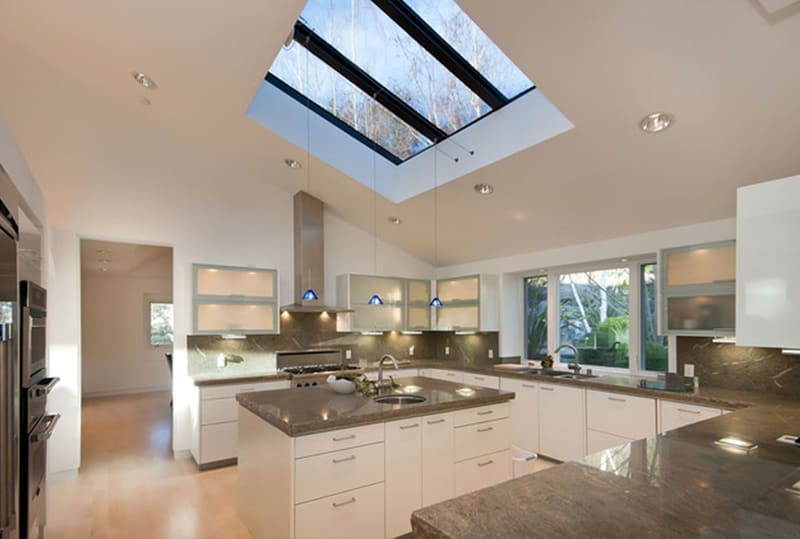
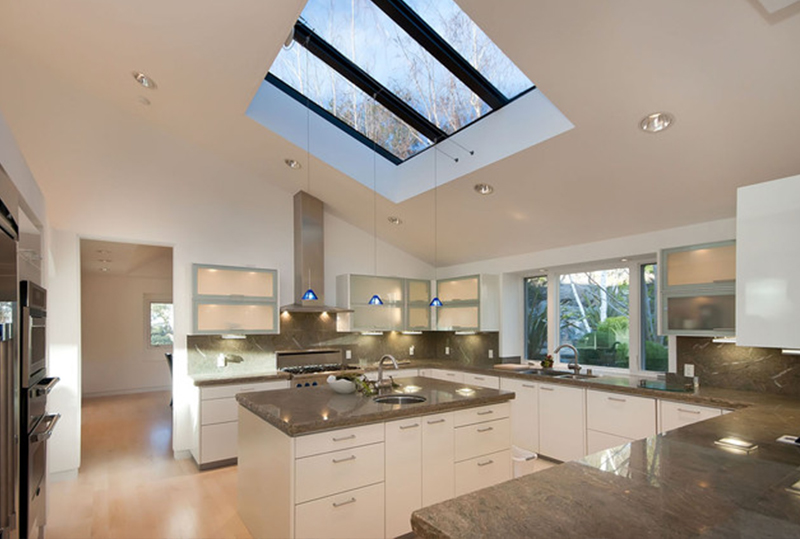
Use skylights or clerestory windows to increase natural lighting into internal spaces, reducing the need for artificial lighting during the day. Consider placement to ensure you are not allowing excessive heat into the house during summer.8. Ventilation
Buidling a new home with well positioned windows and doors to maximise cross-flow ventilation (ceiling fans can also help with this).9. House Layout
Avoid house plans with voids and mezzanine levels because they are harder and more expensive to heat. Look for rooms that can be closed off.10. Interior Design
The use of mirrors as an interior feature can increase natural light within the home.11. Lighting
Use LED lighting. An LED light is 4 to 5 times more efficient than the typical incandescent or halogen equivalent.12. Landscaping
Plant drought-tolerant plants in the garden to reduce water use, and consider adding to the neighbourhoods biodiversity by using native planting. It’s worth putting time and effort into your landscape design choices, as strategic planting can provide shade, protection from wind and privacy.13. Water saving
Install rainwater tanks for the toilet, washing machine and watering the garden or recycle greywater. Install solar hot water and use water-saving shower heads and taps.14. Energy efficient appliances
Check the Energy Rating website (www.energyrating.gov.au) when buying appliances. The higher the rating, the less they cost to run. You can also check the WELS Rating (Water Efficiency Labelling Scheme) when buying washing machines and dishwashers. If weather permits, always use a clothesline instead of a dryer. Check out our guide to eco friendly house designs.

iBuildNew Editorial Team
As the specialist voice of Australia’s largest new home building resource, the iBuildNew Editorial Team delivers deep-dive coverage into the house and land sector. From analysing new estate launches to highlighting the country’s leading home designs, we track the building journey to provide clarity for every buyer.


