Energy efficiency upgrades that pay off in the long run
Energy efficiency has shifted from a compliance exercise to a financial consideration buyers increasingly factor into long-term ownership costs. With energy prices remaining volatile and minimum standards tightening across new builds and renovations, the question for buyers is no longer whether efficiency matters, but which upgrades actually deliver lasting value.
While marketing often highlights solar panels or smart technology, the most effective energy upgrades tend to be quieter decisions embedded in a home’s structure, layout, and services, choices that reduce ongoing costs regardless of how energy markets move.
Building fabric: where long-term performance is locked in
The most reliable efficiency gains come from improvements that reduce a home’s need for heating and cooling in the first place. Unlike add-ons, these upgrades work passively and cannot be easily retrofitted later. Higher-grade insulation to roofs, walls, and under slabs consistently delivers some of the strongest returns.
For buyers, the key is not just insulation presence, but specification, thickness, installation quality, and continuity across the building envelope. Poorly installed insulation can underperform dramatically, even when nominal R-values appear compliant.
Double or upgraded glazing is another area where upfront cost often translates into long-term savings and comfort. In climates with hot summers and cool winters, improved glazing reduces heat transfer year-round, lowering reliance on mechanical systems and improving internal temperature stability. These upgrades rarely feature prominently in display home marketing, but they are among the most difficult, and expensive, to address after construction.
Efficient systems that reduce ongoing operating costs
Once the building envelope is performing well, system upgrades become more effective. High-efficiency heating and cooling systems, particularly reverse-cycle air conditioning with zoning, can significantly reduce energy consumption compared to older ducted or resistive systems.
For buyers, zoning capability is often as important as the system itself, allowing energy use to be targeted to occupied areas rather than the entire home. Heat pump hot water systems have also emerged as one of the more financially sensible upgrades, especially for households with consistent daily usage.
While installation costs can exceed traditional systems, lower running costs and improving reliability have shifted heat pumps into the “long-term payback” category for many owner-occupiers. The key consideration for buyers is system sizing and integration. Oversized systems tend to cycle inefficiently, while poorly planned layouts can negate much of the theoretical efficiency gain.
Solar and storage: returns depend on usage, not just capacity
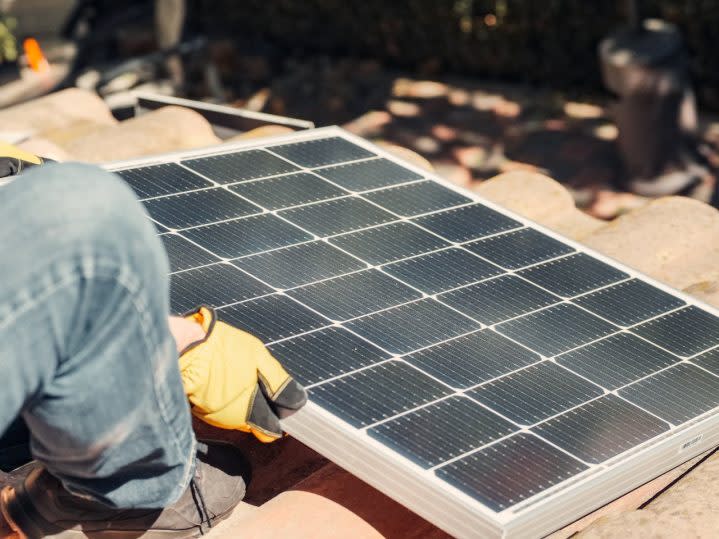
Rooftop solar remains one of the most visible energy upgrades, but its payback varies significantly based on household behaviour. For buyers who work from home or have daytime energy demand, solar systems often deliver faster returns by offsetting grid usage when electricity prices are highest.
In contrast, households with predominantly evening usage may see longer payback periods unless systems are paired with load management or storage. Battery storage, while still carrying longer payback horizons, can make sense in areas with frequent outages or where buyers prioritise energy independence.
From a resale perspective, well-integrated solar systems are increasingly viewed as a baseline expectation rather than a premium feature, particularly in newer estates.
Design decisions that influence energy performance over decades
Not all efficiency upgrades involve equipment.
Orientation, window placement, and shading strategies can materially influence a home’s energy profile without adding mechanical complexity. Homes that maximise northern light while controlling summer heat through eaves, setbacks, and landscaping often require less intervention from heating and cooling systems.
For buyers evaluating new homes or knockdown rebuilds, these design fundamentals can have a greater impact than individual appliances.
Importantly, these decisions also tend to age well. Mechanical systems will eventually be replaced, but a well-considered layout continues to deliver performance benefits throughout the home’s lifespan.
What buyers should prioritise
For buyers weighing upgrade decisions, the most durable returns typically come from improvements that:
Reduce energy demand before adding generation or technology
Are difficult or costly to retrofit later
Improve both running costs and day-to-day comfort
Align with how the household actually uses the home
Energy efficiency is increasingly less about ticking inclusions and more about understanding how a home performs as a system.
Buyers who prioritise foundational upgrades over surface-level features are often better positioned to manage long-term costs, regardless of how standards, tariffs, or technologies evolve.

Joel Robinson
Joel Robinson is the Editor in Chief at iBuildNew, where he leads the editorial team and oversees the country's most comprehensive news coverage dedicated to the new home building industry. With more than a decade of experience in residential real estate journalism, Joel brings deep insight into Australia's evolving home building and construction landscape.