How sustainability is shaping the Australian homes of tomorrow

Australia’s housing market is entering a new era, one where sustainability isn’t just an aspiration but an expectation. From energy-efficient materials and passive design to renewable technologies and smarter construction methods, builders are increasingly shaping homes around long-term performance and environmental impact.
Over the past decade, several factors have converged to drive this shift. Rising energy costs, more stringent building codes such as the National Construction Code 2022, and growing consumer awareness have placed sustainability at the forefront of design and construction. The push toward net zero emissions by 2050 has further accelerated innovation, influencing everything from how homes are positioned on site to the systems that power them.
While early green initiatives were once seen as niche or costly, the industry has evolved rapidly. Volume builders and boutique developers alike are now adopting sustainability measures as standard practice - think double glazing, high insulation values, solar integration, and efficient heating and cooling systems. Many are going beyond compliance, pursuing 7-Star NatHERS ratings or integrating all-electric, gas-free home designs that reduce reliance on fossil fuels.
 Builders are also embracing smarter materials and circular construction principles, with an increasing focus on durability and waste reduction. Prefabricated components, for instance, can minimise on-site waste and improve quality control, while materials such as cross-laminated timber are gaining traction for their lower embodied carbon and aesthetic appeal.
Beyond environmental impact, the benefits for homeowners are tangible. Sustainable homes can deliver lower running costs, greater comfort, and improved resilience to heat and weather extremes. These qualities are becoming key decision points for buyers, particularly owner-occupiers looking to future-proof their investment and lifestyle.
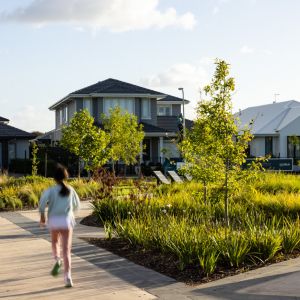
Urban planners and sustainability researchers note that sustainable design is also influencing broader community outcomes. Developments that prioritise walkability, green space, and water-sensitive landscaping are creating healthier, more connected neighbourhoods - appealing to both environmentally conscious and family-oriented buyers.
As sustainability continues to evolve from a design choice to a market standard, the Australian homes being built today are laying the groundwork for a more efficient and resilient housing future. The result is not just greener buildings, but smarter, more liveable communities, built for the challenges of tomorrow.
Builders are also embracing smarter materials and circular construction principles, with an increasing focus on durability and waste reduction. Prefabricated components, for instance, can minimise on-site waste and improve quality control, while materials such as cross-laminated timber are gaining traction for their lower embodied carbon and aesthetic appeal.
Beyond environmental impact, the benefits for homeowners are tangible. Sustainable homes can deliver lower running costs, greater comfort, and improved resilience to heat and weather extremes. These qualities are becoming key decision points for buyers, particularly owner-occupiers looking to future-proof their investment and lifestyle.
Urban planners and sustainability researchers note that sustainable design is also influencing broader community outcomes. Developments that prioritise walkability, green space, and water-sensitive landscaping are creating healthier, more connected neighbourhoods - appealing to both environmentally conscious and family-oriented buyers.
As sustainability continues to evolve from a design choice to a market standard, the Australian homes being built today are laying the groundwork for a more efficient and resilient housing future. The result is not just greener buildings, but smarter, more liveable communities, built for the challenges of tomorrow.
Builders are also embracing smarter materials and circular construction principles, with an increasing focus on durability and waste reduction. Prefabricated components, for instance, can minimise on-site waste and improve quality control, while materials such as cross-laminated timber are gaining traction for their lower embodied carbon and aesthetic appeal.
Beyond environmental impact, the benefits for homeowners are tangible. Sustainable homes can deliver lower running costs, greater comfort, and improved resilience to heat and weather extremes. These qualities are becoming key decision points for buyers, particularly owner-occupiers looking to future-proof their investment and lifestyle.
Urban planners and sustainability researchers note that sustainable design is also influencing broader community outcomes. Developments that prioritise walkability, green space, and water-sensitive landscaping are creating healthier, more connected neighbourhoods - appealing to both environmentally conscious and family-oriented buyers.
As sustainability continues to evolve from a design choice to a market standard, the Australian homes being built today are laying the groundwork for a more efficient and resilient housing future. The result is not just greener buildings, but smarter, more liveable communities, built for the challenges of tomorrow.
Joel Robinson
Joel Robinson is the Editor in Chief at iBuildNew, where he leads the editorial team and oversees the country's most comprehensive news coverage dedicated to the new home building industry. With more than a decade of experience in residential real estate journalism, Joel brings deep insight into Australia's evolving home building and construction landscape.