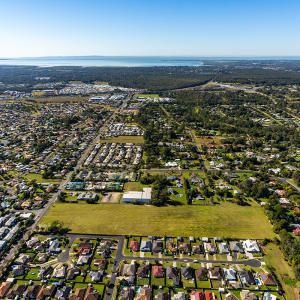
How to choose the right land estate for you

As demand for new housing continues to outpace supply in established suburbs, masterplanned land estates offer a coordinated way to deliver homes, roads, parks, and community facilities on large parcels of land.
For many buyers, they provide an accessible entry point into the market, a new block with modern services, close to emerging schools and retail, and in a community designed with a long-term vision. They’re especially suited to first-home buyers, young families and investors seeking predictability, structure, and future growth potential.
But land estates vary widely, and the differences between locations can shape everything from daily convenience to capital growth. Understanding these distinctions is key to making a confident, well-informed choice.
The most reliable decisions come from looking beyond price lists and brochures. Factors such as infrastructure, zoning, accessibility and market trends can meaningfully influence both liveability and long-term performance. Below, we break down the essential criteria to evaluate when comparing land estates across different locations.
Location fundamentals, more than just an address
While “location, location, location” still holds true, today’s land buyers need a deeper understanding of what makes one area work better than another. The estate’s location will determine your commute, access to services, and future resale prospects. Start by assessing proximity to daily necessities, schools, shopping centres, medical services and employment hubs. A quieter estate further from town centres may suit some households, but longer travel times can be challenging for families or those needing regular access to essential services. It’s also worth looking at the broader regional context. Is the suburb experiencing population growth? Are transport upgrades, new schools or commercial precincts planned? These regional shifts often underpin long-term value and influence how a community evolves.Infrastructure and accessibility, the foundation of value
Infrastructure is one of the strongest value drivers when comparing estates. Locations with established road networks, reliable utilities and access to major transport corridors typically command higher prices, and often justify them. Consider the quality of road access. Well-maintained public roads offer greater flexibility for future development and more reliable access in all weather conditions. For estates within commuting distance of major cities, public transport options matter too. Current bus routes, planned rail extensions or new transport hubs can all influence convenience and future demand. Utility infrastructure is another major differentiator. Estates with existing connections to electricity, water, sewerage and telecommunications reduce both upfront costs and development timeframes. Extending utilities to an undeveloped block can quickly escalate into tens of thousands of dollars, making this an essential factor in your comparison.Zoning and development potential
Zoning rules determine what you can, and cannot, do with your property. When comparing estates, understanding these regulations is critical. Check the zoning classification for each area. Some zones allow for secondary dwellings, home-based businesses or future subdivision, while others limit development to a single residence. If you’re hoping to maintain future flexibility, ensure the zoning aligns with your long-term plans. Also review any estate covenants or developer guidelines. These may set design standards, dictate building materials or specify minimum building values. While such guidelines can help maintain neighbourhood quality, they can also restrict architectural choice.Physical characteristics and environmental considerations
Land isn’t uniform, and its physical characteristics can significantly influence both usability and cost. Topography is one of the biggest considerations. Flat, well-draining land offers greater building flexibility and typically lower construction costs. Steeper sites can provide elevated outlooks but often require additional engineering and excavation, which can add substantial cost. Soil quality affects building foundations, landscaping and site stability. Clay, sand and rock each come with different engineering requirements. If you hope to create extensive gardens or pursue hobby farming, soil composition becomes even more important. Environmental factors are equally critical. Investigate flood overlays, bushfire risk areas and any natural features that may affect insurance premiums or building requirements. Understanding these conditions early helps avoid unexpected costs later.Market analysis and comparable sales
A strong understanding of local market conditions ensures you’re comparing estates on more than just headline prices. Look at recent sales of comparable lots within each estate and its surrounding suburbs. Trends over the past 6–12 months, whether stable, rising or softening, can reveal the area’s demand profile and long-term prospects. Pay attention to the speed of sales. Blocks that sell quickly often indicate strong demand and buyer confidence, while slower sales may signal oversupply or lower market sentiment. It’s also worth considering broader economic factors. Employment hubs, population growth, new transport links and planned public investment can shape future value. Conversely, economic headwinds may limit short-term growth in some areas.Community and lifestyle factors
Beyond the physical block, the surrounding community can significantly influence your long-term satisfaction. Some estates emphasise family-friendly living with parks, playgrounds, walking trails and planned activity centres. Others cater to rural lifestyles with larger blocks and minimal shared facilities. Understanding the estate’s vision, and how well it aligns with your lifestyle, helps narrow your options. Check the status and timeline of planned community amenities. Promised parks, retail centres or recreation spaces add value, but only if they’re delivered. Reviewing the developer’s track record provides insight into reliability and build-out timelines.Due diligence essentials
Before finalising your decision, thorough due diligence ensures you understand all obligations and inclusions. Review the contract of sale closely. Look for ongoing fees such as body corporate charges, maintenance contributions or utility connection costs. Some estates package these into the initial price, while others treat them separately. Verify all claims about infrastructure, amenities and development staging. Seek written confirmation for key commitments and check whether any conditions apply. Understanding these details upfront reduces the risk of surprises and helps you compare estates on a like-for-like basis.Making your decision
Comparing land estates across different locations is ultimately about balancing your priorities, whether that’s lifestyle, commute, affordability, investment potential or future development flexibility. A structured evaluation framework can help. Rate each estate against your key criteria and revisit your shortlist after on-site inspections. Visiting at different times of day provides a clearer sense of the area’s rhythm, noise levels and activity. The best decisions come from thorough research and clarity about your long-term goals. By approaching your comparisons methodically, you’ll be well-positioned to choose the land estate that delivers the right mix of liveability, practicality and future potential.
Joel Robinson
Joel Robinson is the Editor in Chief at iBuildNew, where he leads the editorial team and oversees the country's most comprehensive news coverage dedicated to the new home building industry. With more than a decade of experience in residential real estate journalism, Joel brings deep insight into Australia's evolving home building and construction landscape.