How to protect resale value in estates where every home looks the same

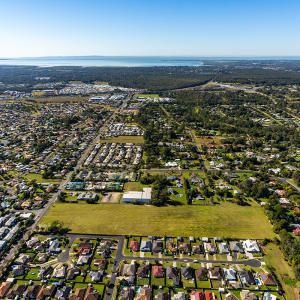
Uniform streetscapes are a defining feature of many new housing estates. Covenants, developer design guidelines and volume-builder floorplans create cohesion, but they also compress difference.
For buyers building in these communities, the resale question isn’t about bold architecture or landmark design. It’s about how to position your home within a field of near-identical stock so that, when it comes time to sell, buyers see incremental value rather than just another listing in the same street.
The opportunity isn’t in dramatic upgrades. It’s in strategic differentiation that aligns with how the local market actually behaves.
Understand what you’re really competing with
In masterplanned estates, your resale competition isn’t the established suburb down the road. It’s:
The same floorplan two streets over
The same builder still marketing house-and-land packages
Brand-new stock released in the next stage
If land is still being released nearby, buyers can compare your home to a fresh build with warranties and promotional upgrades. That compresses price growth in early years. Resale performance in these environments typically favours homes that solve a problem better than the base product, not homes that simply look more expensive. Before committing to upgrades, assess:
How much future land supply remains
Whether the estate skews investor-heavy or owner-occupier
The typical buyer profile (young families, downsizers, multigenerational households)
The price ceiling already established in the area
Overcapitalising above that ceiling rarely translates at resale.
Prioritise layout over cosmetics
When most façades follow similar guidelines, buyers look past the exterior quickly. Floorplan functionality becomes the real point of difference. Resale-friendly layouts tend to include:
A genuine second living zone that can be closed off
A master suite positioned away from secondary bedrooms
Adequate storage (walk-in linen, garage storage, pantry depth)
A study nook or separate home office
n estates dominated by compact four-bedroom plans, a slightly better internal configuration can carry more value than upgraded tapware or stone thickness. If you’re choosing between structural improvements and decorative upgrades, structural usually wins at resale.
Think beyond the façade upgrade
Many buyers assume a more elaborate façade guarantees stronger resale. In reality, façade upgrades often deliver diminishing returns if the whole street has chosen the same “premium” option. More enduring value tends to come from:
Higher ceiling heights (where available)
Better natural light through window placement
Enhanced insulation and glazing
Functional landscaping
Landscaping in particular is underappreciated. In new estates, many homes are sold with unfinished gardens. A completed, low-maintenance outdoor area, turf, planting, fencing, driveway and alfresco integration, reduces effort for the next buyer and improves perceived value immediately.
Avoid hyper-personal design decisions
Highly individual styling can narrow your buyer pool later. Feature walls in bold colours, unconventional tiling, or heavily customised joinery may suit your taste but can become a negotiation point at resale. Neutral palettes, durable finishes and timeless materials broaden appeal.
The aim isn’t to be bland, it’s to avoid forcing the next buyer to budget for cosmetic changes. In uniform estates, broad appeal often outperforms strong personality.
Energy efficiency is emerging as a quiet differentiator
As building standards tighten and energy costs remain a concern, homes that perform better thermally can gain an edge, even if buyers don’t articulate it directly. Upgrades such as:
Double glazing
Zoned heating and cooling
Solar panels
Thoughtful orientation to capture northern light
may not always deliver dollar-for-dollar returns immediately, but they increasingly influence buyer perception, particularly among owner-occupiers.
In estates where build quality can vary between builders, demonstrable efficiency can separate your home from others built to the minimum standard.
Positioning within the estate matters
Not all lots perform equally over time. Homes backing onto parks, wetlands or established green corridors typically retain stronger demand than those facing busy distributor roads or high-traffic entry points. If you’re still selecting land, consider:
Proximity to future schools or town centres
Distance from estate entry congestion
Orientation and overshadowing
Whether future stages could impact privacy
These factors are difficult to change later, and they influence resale more than most internal upgrades.
Timing your exit
Resale strategy also depends on lifecycle timing. Selling while the developer is still offering incentives on new builds can suppress price growth.
Waiting until the estate matures, landscaping established, schools operational, retail open, often shifts buyer perception from “new estate” to “established community.” That transition can materially change demand dynamics.
The goal isn’t to outshine the street
In uniform estates, resale strength rarely comes from building the most expensive home in the street. It comes from building the most functional, complete and broadly appealing version of what the market already understands.
The buyers who purchase in these communities are often seeking predictability, in design, pricing and lifestyle. Subtle, strategic improvements that enhance liveability without isolating your home from its context are what tend to carry value forward.
In streets where homes look similar, it’s the invisible decisions, layout, efficiency, positioning and restraint, that often make the difference when the resale sign goes up.

Joel Robinson
Joel Robinson is the Editor in Chief at iBuildNew, where he leads the editorial team and oversees the country's most comprehensive news coverage dedicated to the new home building industry. With more than a decade of experience in residential real estate journalism, Joel brings deep insight into Australia's evolving home building and construction landscape.