Prefabricated Homes: The Trend Building Momentum across Australia
Prefabricated homes, often called modular or kit homes, are quickly moving from niche to mainstream in Australia. Until recently, however, there was one big challenge: financing. Most banks required the home to be fixed to the land before releasing significant funds, leaving buyers to cover a large...

Prefabricated homes, often called modular or kit homes, are quickly moving from niche to mainstream in Australia.
Until recently, however, there was one big challenge: financing. Most banks required the home to be fixed to the land before releasing significant funds, leaving buyers to cover a large portion of the build cost themselves during the factory stage.
Now, with new lending changes from the Commonwealth Bank of Australia (CBA), that roadblock is starting to disappear.
What Is a Prefabricated Home? Types and Key Features
A prefabricated (or prefab) home is built off-site, typically in a factory, and then transported to its final location for assembly or installation.
Unlike traditional construction, which unfolds over months on-site, prefab homes are created in controlled environments, allowing for greater precision, fewer delays, and faster delivery times.
Types of prefab homes include:

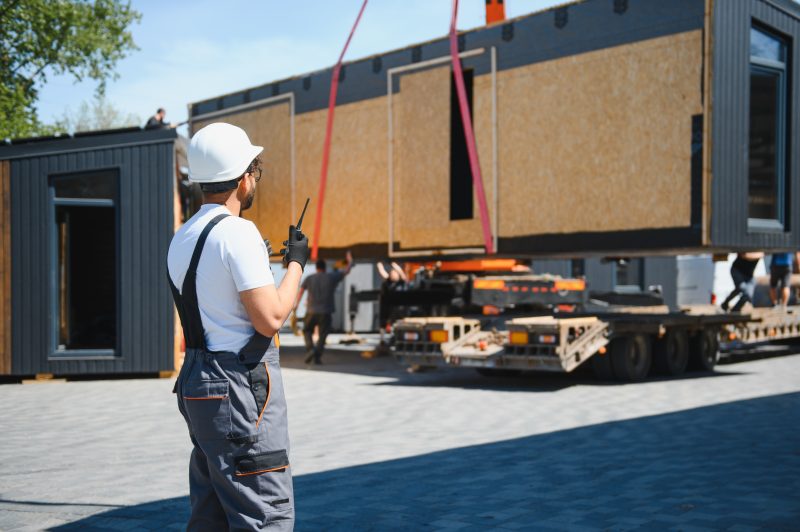
- Modular homes: Constructed in large sections (modules) and assembled on-site.
- Panelised homes: Built using factory-made wall and floor panels.
- Kit homes: Shipped in parts to be assembled by the owner or a contractor.
- Flat-pack homes: Delivered in flat pieces and put together on-site, IKEA-style.
The Big Breakthrough in Prefab Home Loans
Commonwealth Bank of Australia has introduced a construction loan structure specifically designed for prefab homes. Buyers can now access progress payments earlier in the process, while the home is still being built in the factory. This is a significant shift from the traditional approach, where buyers had to self-fund much of the upfront cost. If you build with a CBA-assessed prefab manufacturer, you can access up to 80% of the contract price during the off-site stage. Even if you choose a non-accredited manufacturer, you can still receive up to 60%, which is a vast improvement on previous lending rules. On top of this, Commonwealth Bank is working with industry group prefabAUS to develop a standardised prefab construction contract, designed to give both lenders and buyers more clarity and confidence.Why Are Prefab Homes Gaining Momentum in Australia?
Prefab homes are emerging as a smart solution to Australia’s housing needs. Produced in controlled factory environments, they combine precision craftsmanship with efficient use of materials, delivering high-quality housing at scale. Once complete, these homes are transported to site for installation, reducing the amount of on-site work required.- Speed of Construction With much of the work completed off-site, prefab homes can be ready in a matter of weeks rather than months. The streamlined process reduces time spent coordinating multiple trades on-site, allowing homeowners to move in far sooner than with traditional builds.
- Cost Efficiency Factory-based construction allows for bulk purchasing of materials, reduced waste, and optimised labour. These efficiencies can translate into cost savings for buyers without compromising on quality or design.
- Quality and Sustainability Prefab homes are built to meet or exceed Australian building standards. Many include features such as high-performance insulation, double glazing, and sustainable materials.
- Solutions for Regional and Remote Areas In locations where tradespeople and materials are scarce, prefab homes can be a practical solution. Fully or partially constructed homes are transported to site, reducing the challenges and costs associated with remote-area construction.
Challenges and Considerations with Prefab Homes
Like any building method, prefab construction isn’t perfect. Transport logistics can be tricky for large modules, and there may be limitations in customisation depending on your builder. Some councils also have zoning or planning restrictions, so it’s important to consult local authorities early in the process.However, as industry standards and financing continue to evolve, these barriers are shrinking fast.
What This Means for Homebuyers
For anyone considering a prefab build, Commonwealth Bank’s updated lending approach removes one of the biggest hurdles, how to pay for the home before it arrives on your land. Having access to progress payments during factory construction means less reliance on personal savings or bridging finance, making the process far more accessible. If you opt for an accredited manufacturer, you’ll benefit from even higher funding limits, giving you more flexibility in your design and build choices. The upcoming standard-form prefab contract will also help simplify the approval process with lenders, cutting down on delays and uncertainty. Combined with the faster timelines that prefabricated construction already offers, these changes could see you moving into your new home much sooner, and with fewer interim costs for renting or temporary accommodation.Your Next Steps Towards a Prefab Home
If you’re ready to explore prefab living, start by researching builders who specialise in modular construction and checking whether they are on Commonwealth Bank’s list of assessed manufacturers. This can make a big difference to the level of funding you can access during your build. Next, speak with a mortgage broker or lender who understands prefab finance. They can help structure your loan to align with the factory and installation stages, ensuring smooth progress payments. Review your builder’s contract carefully, especially in relation to delivery timelines, site works, and warranties to avoid surprises down the track. Finally, think about how prefab’s strengths: speed, efficiency, and quality can work for your lifestyle.The Bottom Line
Prefabricated homes have always been an appealing option for their speed, efficiency, and quality, but now with more flexible financing options from a major bank, they’re becoming a practical reality for more Australians. With the right builder, the right loan, and a clear plan, your dream home could be ready in months, not years.
iBuildNew Editorial Team
As the specialist voice of Australia’s largest new home building resource, the iBuildNew Editorial Team delivers deep-dive coverage into the house and land sector. From analysing new estate launches to highlighting the country’s leading home designs, we track the building journey to provide clarity for every buyer.