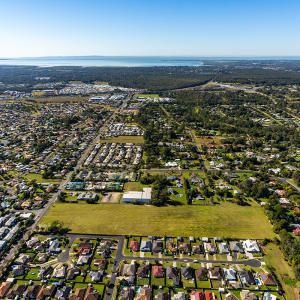
Should you buy land or house and land in a developed estate?

Developed estates continue to dominate greenfield supply across Australia, but buyers entering these communities are still faced with a fundamental choice: secure a vacant block and manage the build separately, or opt for a house & land package where the home is predefined.
While both paths lead to the same postcode, the financial exposure, flexibility, and delivery risk can differ significantly. The right option depends less on preference and more on how much control, certainty, and responsibility a buyer is prepared to take on.
What buying land alone really involves
Purchasing land first gives buyers maximum design freedom, but it also transfers more decision-making and risk to the buyer.
Vacant land buyers are responsible for selecting a builder, finalising a design that complies with estate guidelines, and managing pre-construction variables such as site costs, BASIX compliance, and post-contract variations. While this approach can suit buyers with a clear vision or specific design requirements, it also exposes them to cost escalation if build prices rise between land settlement and contract signing.
In developed estates with staged releases, this timing gap can be material. Land may settle months after exchange, and construction pricing is rarely held open indefinitely. For buyers relying on fixed budgets or tight lending margins, this can introduce uncertainty before construction even begins.
How house & land packages shift the risk profile
House & land packages are structured to reduce this exposure by locking in both the land price and the home specification upfront. While they typically offer fewer customisation options, they provide a clearer total cost picture earlier in the buying journey.
For many buyers, particularly first-home buyers or those building for the first time, this certainty matters more than flexibility. Site costs, estate compliance, and design approvals are usually absorbed into the package, limiting surprises during pre-construction.
In estates where builders are pre-approved by the developer, house & land packages can also shorten the approval timeline, helping buyers move from purchase to construction faster than if they were coordinating separate parties.
Cost transparency versus design flexibility
The trade-off between the two options often comes down to how buyers value transparency versus control. Land buyers may achieve a more tailored outcome, but must actively manage consultant fees, approvals, and builder negotiations.
House & land buyers sacrifice some individuality in exchange for streamlined delivery and clearer pricing, particularly in estates designed around repeatable housing typologies. It’s also worth noting that many modern house & land offerings are no longer “one size fits all”.
Builders increasingly offer multiple façade options, internal layout tweaks, and upgrade paths that allow for personalisation without reopening the entire pricing structure.
Estate context matters more than buyers expect
Not all developed estates are equal, and the land versus house & land decision should be made in the context of how the estate itself operates. Some estates are designed to encourage architectural diversity, making land purchases more attractive for buyers seeking custom homes. Others prioritise delivery speed and consistency, where house & land packages align more closely with the estate’s planning intent. Infrastructure timing also plays a role.
In estates where amenities, roads, and services are delivered early, buyers may be comfortable managing a longer build process. In newer estates still rolling out core infrastructure, the predictability of a house & land package can reduce holding and planning risks.
Which option suits which buyer?
There’s no universal answer, but patterns do emerge. Buyers with prior building experience, strong equity buffers, or specific spatial requirements often gravitate towards land-only purchases. Buyers prioritising budget control, lender clarity, and time certainty tend to favour house & land packages.
In both cases, the decision should be framed less around headline price and more around exposure to change, whether that’s construction costs, approval timelines, or personal capacity to manage complexity.
In a market where certainty has become a premium, understanding where that risk sits may be the most important choice buyers make before they ever choose a floor plan.

Joel Robinson
Joel Robinson is the Editor in Chief at iBuildNew, where he leads the editorial team and oversees the country's most comprehensive news coverage dedicated to the new home building industry. With more than a decade of experience in residential real estate journalism, Joel brings deep insight into Australia's evolving home building and construction landscape.