GuidesSustainability without the price tag: Will solar and double-glazing pay off in five years?
Sustainability without the price tag: Will solar and double-glazing pay off in five years?
Energy-efficient upgrades are no longer niche additions. Solar panels, double-glazing and upgraded insulation have moved from “nice to have” to expected in many new estates.
But for buyers planning to sell within five years, the question isn’t environmental, it’s financial. Will these upgrades meaningfully increase resale value, or simply make the home easier to live in while you’re there? The answer depends less on the technology itself and more on how it aligns with buyer expectations in your specific market.
Efficiency is shifting from upgrade to baseline
In growth corridors and new house-and-land estates, sustainability features are rapidly becoming standard inclusions rather than premium add-ons. Builders now commonly offer solar packages, improved glazing, and higher energy ratings as part of competitive display home specifications. That shift matters. When an entire estate offers similar features, adding solar or double-glazing won’t necessarily make your home stand out, it will simply prevent it from falling behind.
In five years, buyers are unlikely to pay a significant premium for “having solar” if most comparable homes also have it. But they may discount your property if it lacks what has become the norm. For resale value, sustainability is increasingly defensive rather than speculative. It protects value more than it dramatically boosts it.
The five-year resale lens
If you’re holding a property for 15 or 20 years, long-term energy savings compound and make a clearer financial case. Over five years, the equation is tighter. Consider three buyer-facing factors:
1. Perceived running costs Rising electricity prices have sharpened buyer attention on ongoing expenses. A home with solar, double-glazing and strong insulation signals lower monthly outgoings. Even if buyers don’t calculate exact savings, they factor in perceived affordability. In practical terms, that can widen your buyer pool. First-home buyers and young families are particularly sensitive to cash flow. A home marketed with low energy bills may attract more inspection interest, which supports pricing tension at sale.
2. Energy rating and compliance trends Building standards are tightening across Australia. Minimum energy performance requirements are gradually increasing, particularly in new builds. If your home already meets or exceeds emerging benchmarks, it reduces the risk of being seen as outdated. Over a five-year window, this is relevant. Buyers may become more aware of NatHERS ratings and building performance disclosures, especially as sustainability becomes more visible in marketing. A higher energy rating won’t automatically add $20,000 to your resale, but it can position your home as “future-ready” rather than “needing upgrades”.
3. Buyer psychology in comparable estates In estates where homes are visually similar, differentiation often comes down to floorplan, orientation, landscaping and specification. Sustainability features can contribute to that differentiation, but only if they’re meaningfully better than surrounding stock. For example:
A standard 3kW solar system may not move the dial if everyone has one.
A larger system with battery storage might.
Basic double-glazing in key areas may blend in.
Full thermal performance upgrades (orientation, shading, glazing, insulation package) can become a selling point.
The nuance matters. Buyers respond more strongly to holistic performance than to isolated features.
Solar: incremental value, stronger liquidity
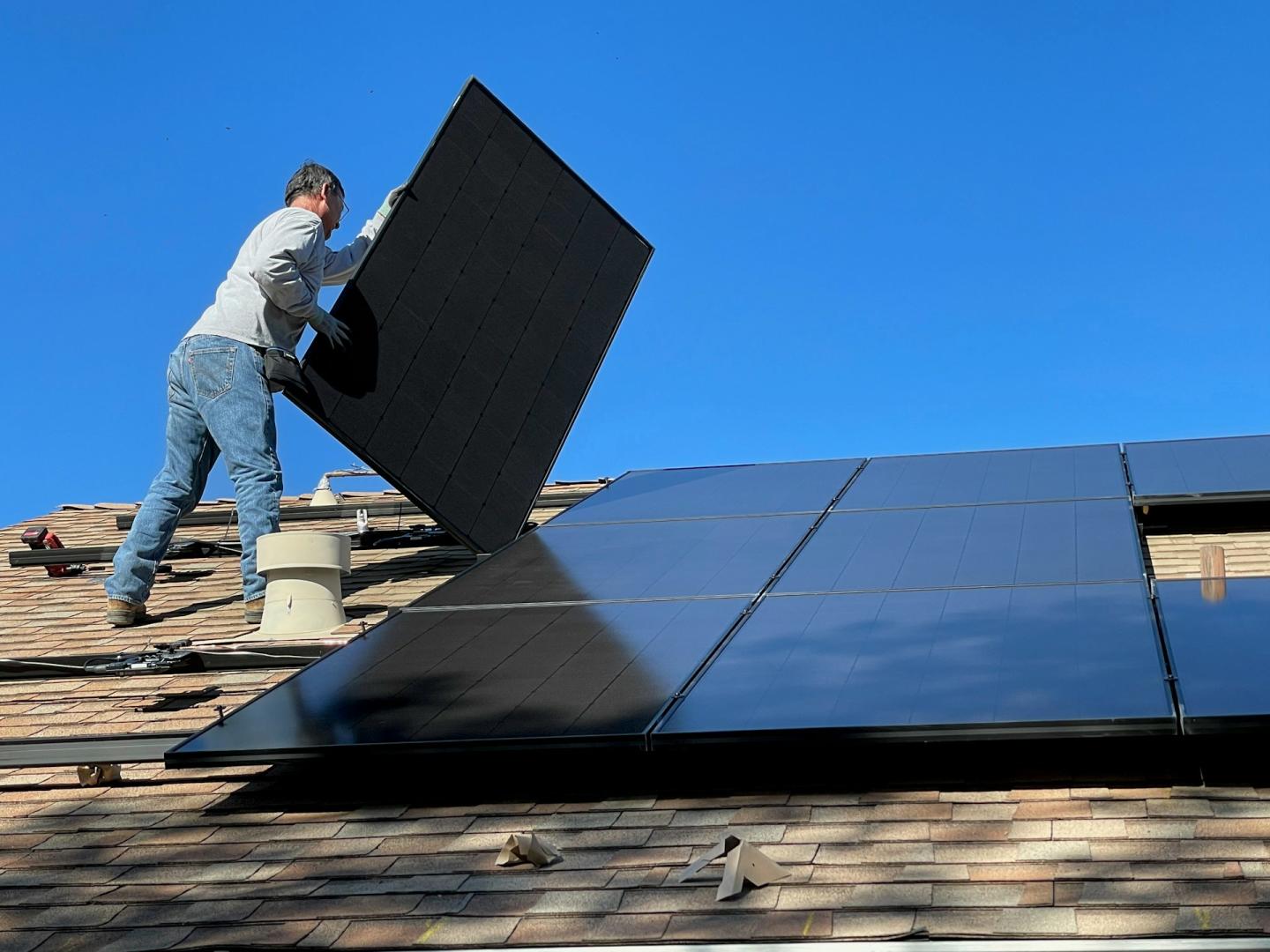
Solar panels are now common enough in many metro fringe markets that they’re expected. On their own, they rarely generate a dollar-for-dollar return within five years. However, they do improve marketability. Agents increasingly highlight “solar-equipped” homes in listings because it aligns with buyer search filters and online algorithms. In practical terms, solar:
Reduces buyer objections around energy bills
Signals a relatively modern build
Makes the home easier to compare favourably against older stock
Battery storage is more complex. It’s still less common and more expensive. Over a short hold period, batteries may not fully pay back financially, and future buyers may not value them at original installation cost. If resale is likely within five years, solar alone is usually the more balanced play.
Double-glazing: comfort now, value later
Double-glazing often delivers less visible marketing impact than solar, but more noticeable day-to-day comfort. Reduced noise, more stable indoor temperatures and improved thermal performance are tangible benefits when living in the home. From a resale perspective, its value depends heavily on context:
In high-traffic corridors or near arterial roads, it can materially improve buyer perception.
In colder southern states, it aligns with climate expectations.
In mild areas, buyers may see it as a bonus rather than a necessity.
Unlike solar, double-glazing is harder to retrofit cheaply. That can make it more defensible as a long-term value addition. Buyers understand that upgrading windows later is disruptive and costly. Over a five-year horizon, double-glazing is unlikely to generate a direct premium, but it can support stronger price retention compared to similar homes without it.
Where sustainability does add clearer value
There are specific scenarios where sustainable features can influence resale more directly:
Owner-occupier dominated estates: Buyers often prioritise comfort and long-term savings over pure price comparison.
Higher price brackets: Expectations rise with price. Efficiency features become part of the quality narrative.
Markets with energy cost sensitivity: Regions experiencing high power prices or extreme temperatures amplify perceived savings.
In these contexts, sustainability contributes to overall positioning rather than standing alone as a headline feature.
The risk of overcapitalising
The main caution for five-year sellers is overcapitalisation. If you spend significantly above what comparable homes offer, premium glazing systems, oversized solar arrays, complex smart energy setups, the resale market may not recognise the full cost.
Buyers typically value sustainability in relative terms, not absolute dollars. They compare against nearby listings. If your upgrades push you well above the local price ceiling, the return narrows. The smarter approach is alignment. Match or slightly exceed estate norms rather than dramatically surpass them.
A strategic way to think about it
Instead of asking, “Will this add value?”, a more useful question is: “Will this reduce risk at resale?” Sustainability upgrades over a five-year window generally:
Improve liveability while you own the home
Protect against being discounted compared to similar properties
Broaden your buyer pool
Support price resilience rather than create a windfall
For short-to-medium-term owners, that defensive strength is often the real payoff. Solar and double-glazing are unlikely to transform your resale price on their own. But as buyer expectations continue to shift, they increasingly form part of the baseline for what a well-specified home looks like. In five years, the greater risk may not be having invested in sustainability, but having ignored it while the market quietly moved forward.

Joel Robinson
Joel Robinson is the Editor in Chief at iBuildNew, where he leads the editorial team and oversees the country's most comprehensive news coverage dedicated to the new home building industry. With more than a decade of experience in residential real estate journalism, Joel brings deep insight into Australia's evolving home building and construction landscape.