GuidesNew home build costs climb 5.8%, the fastest in almost three years, as rate rises squeeze the supply pipeline
New home build costs climb 5.8%, the fastest in almost three years, as rate rises squeeze the supply pipeline
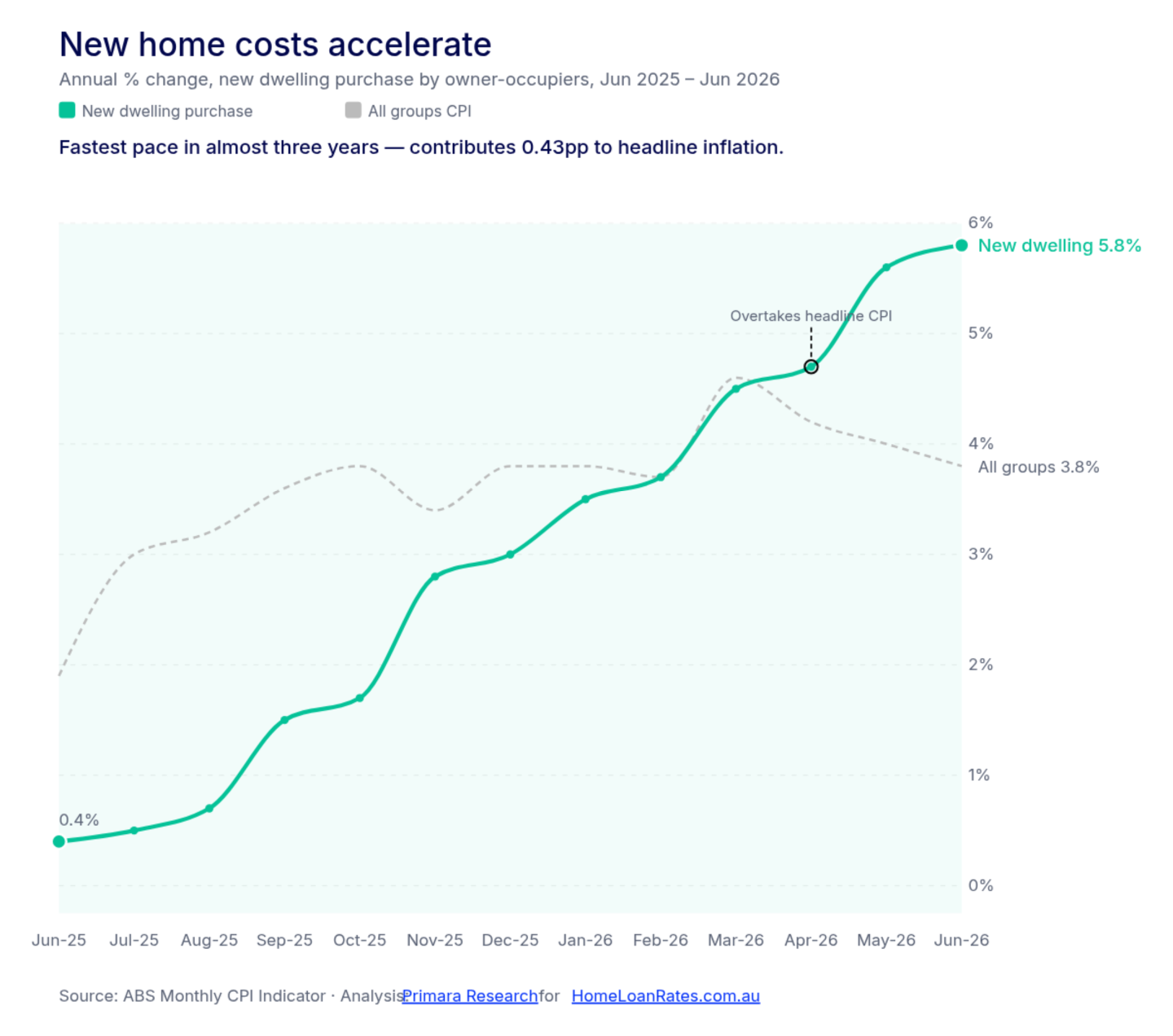
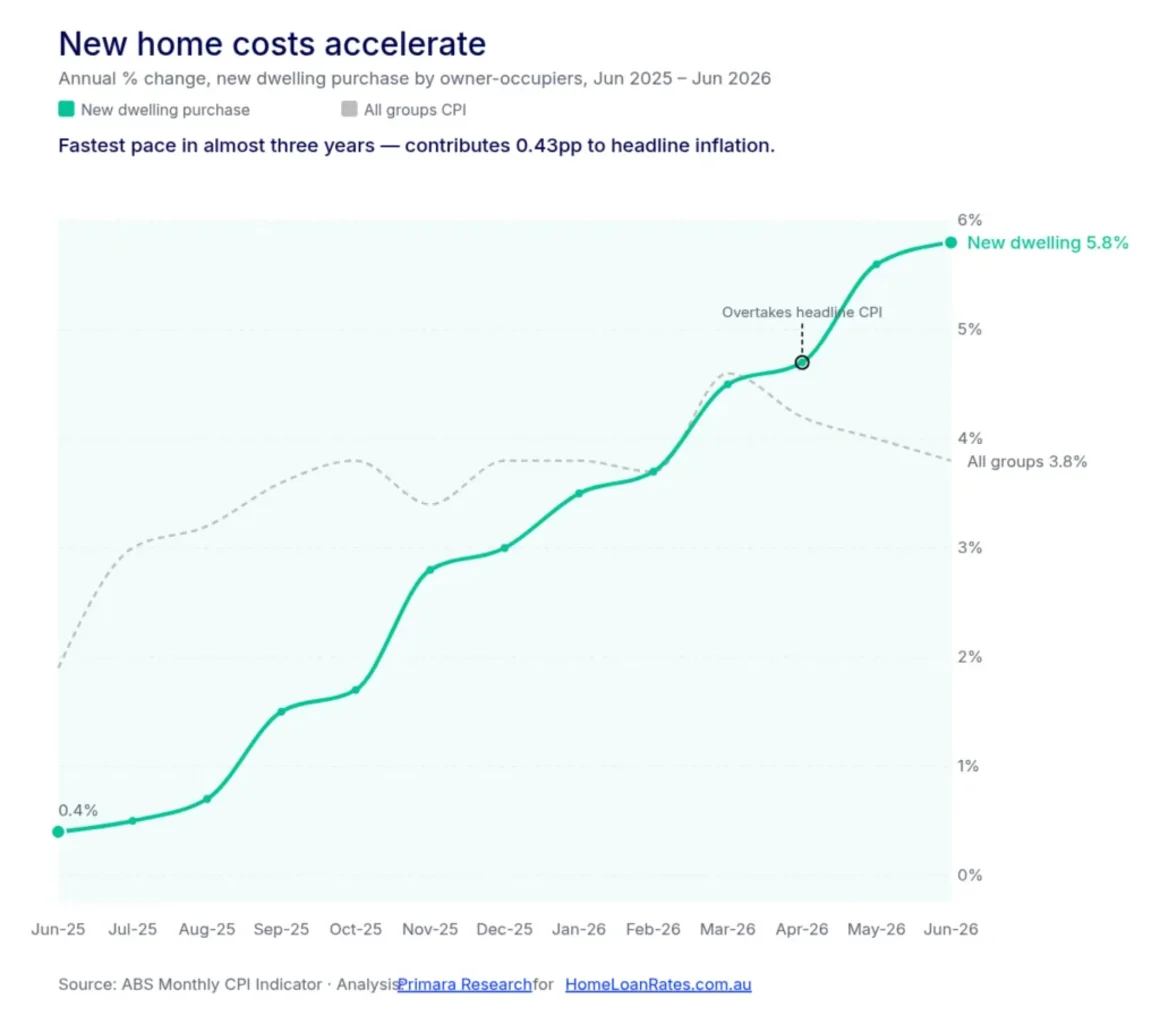
New research from HomeLoanRates.com.au, analysis of the latest ABS Consumer Price Index data conducted by Primara Research, reveals the cost of building a new home rose 5.8% in the year to June 2026, the fastest pace in almost three years and more than fourteen times the 0.4% recorded just twelve months ago.
New dwelling purchase costs have now risen in eleven of the past twelve months. The category contributes 0.43 percentage points to the 3.8% headline inflation figure, ahead of the 0.24 point contribution from rents. Had new home costs simply kept pace with the 3.8% headline rate, they would be adding 0.29 percentage points to inflation, not 0.43. Construction costs are running well ahead of inflation itself.
A rate rise cuts both ways
The Reserve Bank meets on 11 August with the cash rate at 4.35%. In theory, a further rise could ease this specific pressure. Higher rates reduce how many buyers can afford to build, and less demand for construction should, in time, ease price growth in that market.
But that mechanism works directly against the two things the market most needs right now, more homes and lower prices.
"A rate rise could put downward pressure on new build costs by pricing some buyers out of the market altogether," said Peter Drennan, Head of Research and Data at Primara Research. "The problem is that Australia already needs a 49% lift in completions to meet the government's 1.2 million home target. Cooling demand to tame this number risks widening the supply gap it's meant to fix."
Housing carries the inflation load
Housing overall rose 6.8% in the year, the largest contributor to inflation and responsible for roughly 39% of the entire annual increase. With completions already running 305,183 homes behind the pace needed to hit the national target, rising input costs compound a shortfall that a rate rise cannot solve.
"Raising rates to fight this number could lower prices and lower supply at the same time," Drennan said. "That's not a trade-off policy can easily win. It solves the inflation print and worsens the housing shortage in the same move."
What this means if you're planning to build
Waiting for rates to fall won't offset rising build costs. New dwelling costs are climbing at 5.8% a year, well ahead of the RBA's 2-3% inflation target band. Even if rate relief eventually arrives, it won't reverse cost increases already locked in by builders.
A rate rise, if it comes, adds pressure rather than certainty. The RBA's meeting on 11 August could go either way. A hike aimed at cooling inflation would also cool the construction activity the market needs, so there's no clean path to cheaper building costs from here.
Locking in a fixed-price contract sooner protects you from further escalation. Much of this rise is being driven by builders passing on higher material and labour costs, not financing conditions, so a rate outcome either way won't undo it.
The supply shortfall is a longer-term consideration, not just a build-cost one. With completions running well behind the pace needed for the national housing target, constrained supply is likely to support property values in areas where new stock isn't keeping up, worth weighing alongside the build cost itself.

Joel Robinson
Joel Robinson is the Editor in Chief at iBuildNew, where he leads the editorial team and oversees the country's most comprehensive news coverage dedicated to the new home building industry. With more than a decade of experience in residential real estate journalism, Joel brings deep insight into Australia's evolving home building and construction landscape.