RBA holds at 4.35%, what it means for your new home
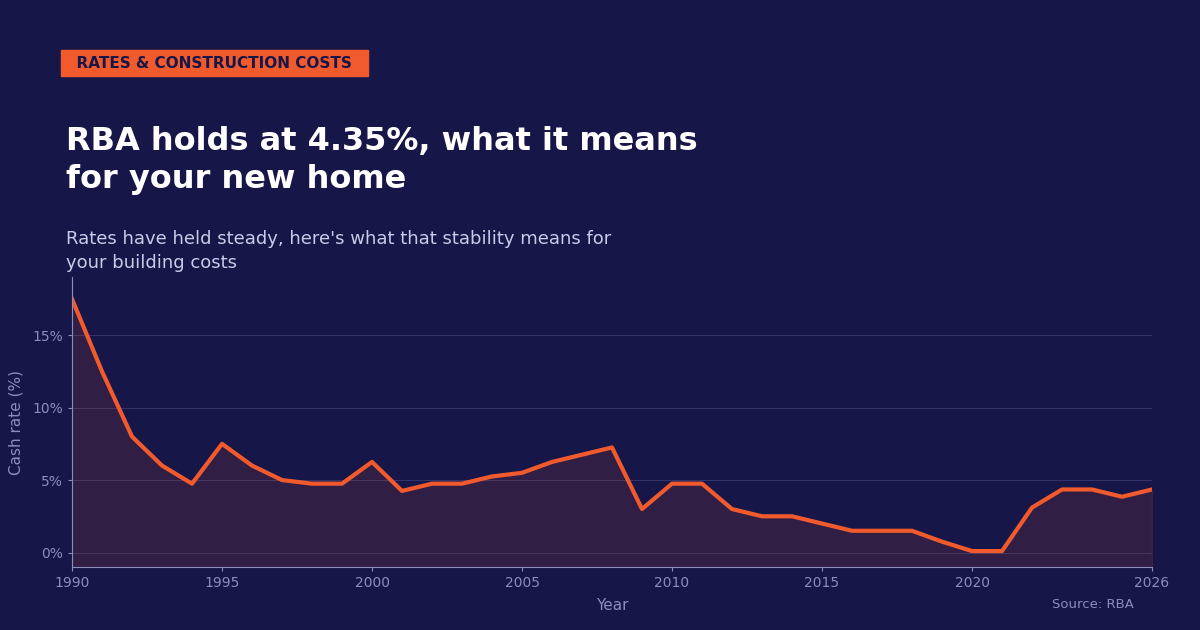
The Reserve Bank met on 11 August and left the cash rate on hold at 4.35%, in line with market expectations. It's the outcome most economists had pencilled in, but it doesn't change the underlying pressure building in construction costs, and if anything it sharpens the case for buyers to move rather than wait.
Rates on hold, stable rates give you a clear picture to plan around
The RBA's post-meeting statement kept the option of a further rise on the table, noting the Board would keep doing what's necessary to bring inflation back to target, including a further increase if upside risks materialise. Headline inflation sits at 3.8% for the year to June, with underlying (trimmed mean) inflation steady at 3.6%, still above the RBA's 2-3% target band.
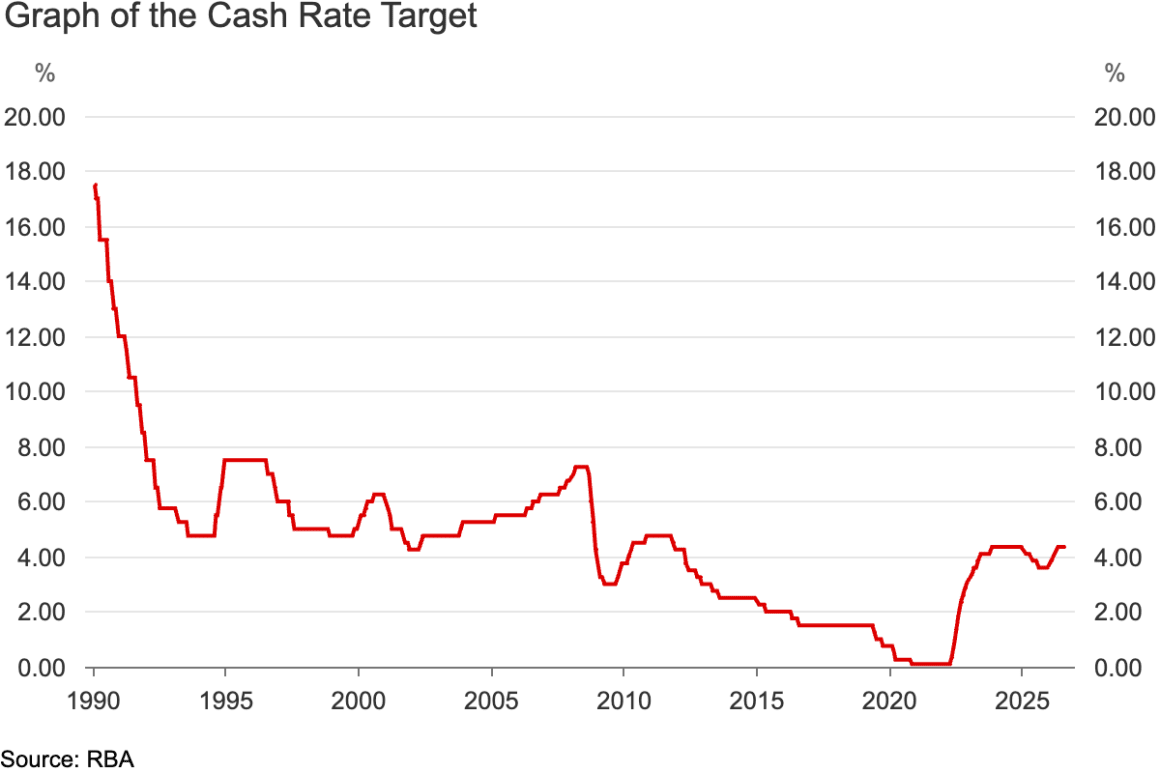
For anyone planning a build, the practical read is this: financing conditions are stable for now, but they're not guaranteed to stay that way, and they were never the thing driving new home costs higher in the first place.
New Property News: DM Property and Ark Capital continue partnership, acquire three sites worth $82 million in GRV
Build costs are moving, here's what's driving it
New dwelling purchase costs rose 5.8% in the year to June, the fastest annual pace in almost three years, and comfortably outstripping the 3.8% headline rate. Housing overall rose 6.8% annually, the single largest contributor to inflation, with new dwelling costs and electricity (up 22.4% as government rebates rolled off) doing most of the work.

This is a cost story, not a rates story. Builders are passing through higher labour and materials costs, and a held or even higher cash rate doesn't reverse that. It simply changes how many buyers can afford to enter the market, not what it costs to build once they do.
New Property News: Building in Officer: First Home Buyer vs Upsizer, Builder by Builder
Undersupply is a reason new builds hold their value
The bigger structural issue sits behind the monthly print. Australia's National Housing Accord target of 1.2 million new homes by mid-2029 is falling further out of reach. Separate analysis has put the current completions shortfall at over 300,000 homes against the pace required, with the country needing roughly a 49% lift in completions just to get back on track. Building approvals for the year to June came in around 15% below the annual rate needed to hit the target, and independent forecasts from industry bodies now put the realistic five-year outcome closer to 1.03 million homes, a shortfall of around 166,000 dwellings against the original goal.
None of that is solved by a rate decision either way. A hike would cool demand and buy some relief on build costs, but at the expense of construction activity the market can't afford to lose. A hold, as delivered, keeps demand intact but does nothing to accelerate the completions the country actually needs.
New Property News: Mirvac's award-winning Henley Brook prepares next land release in Perth's Swan Valley
Why this still favours building now, not waiting
Build costs are rising faster than financing costs are easing. There's no scenario in the current data where waiting for a rate cut delivers a cheaper build. The RBA isn't cutting, and even if it eventually does, it won't unwind the labour and materials cost increases already baked into new contracts.
Locking in a fixed-price build now protects against further cost escalation. With new dwelling inflation still accelerating and no clear ceiling in sight, a contract signed today is a hedge against a market that's shown eleven months of increases out of the last twelve.
Chronic undersupply supports the value of a new build over the medium term. With completions running well behind the national target and the gap widening rather than closing, buyers who secure land and a build now are entering ahead of a supply squeeze that's likely to keep pushing values in undersupplied markets, rather than after it.
Stable rates remove one source of uncertainty from the equation. With the cash rate held at 4.35% and no cut on the immediate horizon, buyers can model financing costs with more confidence than at any point in the last two years, even if those costs aren't falling.
The overall picture is one of a market where the cost pressure is real, but where sitting on the sidelines waiting for conditions to improve is unlikely to pay off. Rates aren't falling, build costs aren't falling, and the supply shortfall isn't closing. For buyers in a position to build, the data points toward locking in sooner rather than later.

Joel Robinson
Joel Robinson is the Editor in Chief at iBuildNew, where he leads the editorial team and oversees the country's most comprehensive news coverage dedicated to the new home building industry. With more than a decade of experience in residential real estate journalism, Joel brings deep insight into Australia's evolving home building and construction landscape.